Open Journal of Pharmacology and Pharmacotherapeutics
An Overlooked Impact of GLP-1 Receptor Agonists on Enteric Coated Medications
Professor, Pharmaceutical Sciences, USA
Author and article information
Cite this as
Atef E. An Overlooked Impact of GLP-1 Receptor Agonists on Enteric Coated Medications. Open J Pharmacol Pharmacother. 2026; 11(1): 13-17. Available from: 10.17352/ojpp.000030
Copyright License
© 2026 Atef E. This is an open-access article distributed under the terms of the Creative Commons Attribution License, which permits unrestricted use, distribution, and reproduction in any medium, provided the original author and source are credited.Glucagon-like peptide-1 receptor agonists (GLP-1 RAs), widely used for diabetes and obesity, have seen exponential use in recent years, necessitating proper evaluation of their potential for drug-drug interactions (DDIs). Several studies have explored DDIs with commonly co-administered medications or narrow-therapeutic-index drugs using both clinical trial data and pharmacokinetic modelling approaches. These investigations have provided valuable insights but remain incomplete.
GLP-1 RAs alter multiple physiological functions that can affect the pharmacokinetics of co-administered oral drugs. Delayed gastric emptying remains the most extensively studied mechanism, with established effects on key parameters including Cmax, tmax, and AUC. However, other mechanisms such as altered intestinal motility, changes in splanchnic blood flow, and modified gut hormone secretion may also contribute.
This commentary focuses specifically on an underexplored DDI: the interaction between GLP-1 RAs and delayed-release (enteric-coated) formulations. By integrating pharmaceutical, biopharmaceutical, and pathopharmacological principles, we predict potential clinical outcomes when delayed-release drugs are co-administered with GLP-1 RAs, highlighting critical considerations for prescribers.
Between 2019 and 2023, the number of non-diabetic patients starting GLP-1RAs in the US rose over 700% (Yeo et al., 2024). With this surge, the potential for clinically significant DDIs is a growing concern. Several studies have systematically evaluated DDIs between GLP-1RAs and co-administered drugs, including narrow-therapeutic-index agents, via clinical or modelling approaches [1-4]. These interactions stem from physiological changes that alter the PK of co-administered drugs, such as increased GFR, renal plasma flow, altered body composition from weight loss, and, most studied, delayed gastric emptying [5,6]. Delayed gastric emptying is also seen in endocrine, gastrointestinal, and neurological disorders [7,8]. Beyond GLP-1RAs, drugs like anticholinergics, ganglion blockers, and tricyclic antidepressants also delay gastric emptying [8]. Meal factors: volume, composition, and gastric/intestinal distension play a role as well [9,10]. Genetics, particularly GLP-1R gene variability, is another contributor to inter-subject differences [11]. Gastric emptying rate (GER) is critical for modified-release dosage forms, whose drug release depends on reaching the small intestine’s higher pH [12].
Some studies note differences in extent of GER effects between oral vs. injectable GLP-1RAs and short- vs. long-term use, but inconsistent study designs under similar conditions prevent firm conclusions [13].
Predicting clinical significance for modified-release drugs requires baseline understanding of normal gastric pH fluctuations and gastric emptying in obese or diabetic patients.
In healthy individuals, median fasting gastric pH is 1.7 (1.4–2.1). After eating, pH quickly rises to a median of 5.0 (4.3–5.4), peaking at 6.7 (6.4–7.0) depending on meal composition. The pH then gradually declines as gastric acid secretion and emptying restore fasting levels within 3 hours post-meal [14,15].This matters because prolonged gastric retention in the fed state can compromise enteric coatings, causing premature drug release.
Many enteric-coated drugs were approved before GLP-1 RAs, so this DDI may not be caught in their labels.
Before discussing the effect of GLP-1 RAs on GER, it’s important to understand the gastric emptying baselines of the populations who commonly use GLP-1RAs.
GER in obesity
Reports on gastric emptying in obesity are inconsistent. Numerous studies describe slower emptying [16-18], yet others report faster emptying [19,20]. Meanwhile, another study identifies effects linked specifically to food consistency [21].
These discrepancies could be attributed to experimental conditions, such as the number of participants, the GER measurement tool, and the enrolled patients’ variability in the degree of obesity and obesity duration.
GER in diabetes
Gastric emptying rate (GER) does not significantly differ between healthy individuals and diabetes patients, though the diabetic group shows greater inter-subject variability [19,22].
However, delayed GER is common in gastroparesis, a frequent complication of uncontrolled diabetes [20,23]. Thus, aside from gastroparesis, baseline GER is not definitively altered by obesity or diabetes alone.
There is a lack of data evaluating the effects of GLP-1 RAs in patients with gastroparesis. Nevertheless, because GLP-1 RAs are known to delay gastric emptying, while not listed as contraindication, caution should be exercised in using GLP-1 RAs in patients with gastroparesis until additional evidence becomes available.
GER effect of GLP1-RA
GLP-1 RA initiation results in a significant GER delay, but attenuates over time. This is particularly observed with long-acting agents. Short-acting agents do not show this attenuation, which may explain their stronger overall effect on gastric emptying. This claim lacks systematic validation, as no study has directly compared all agonists under standardised conditions [24-26].
Association of DDI with GER
A review of GLP-1 RA DDIs using clinical and PK modelling studies shows most investigated drugs have no interaction or a clinically insignificant one. Where significant Cmax and tmax changes occurred, AUC changes were minor and not statistically significant, deemed not clinically relevant [4]. The only potential DDI concerns were oral contraceptives and levothyroxine, though some studies refute even those [2,3]. Based on delayed-release mechanisms, coating materials, drug properties, and indications, our study highlights a potential DDI between enteric-coated products and GLP-1 RAs, and discusses the supporting rationale [2-4].
Enteric Coated Acid Labile Drugs: Prolonged time spent in the stomach can diminish the effectiveness of acid-sensitive coated drugs, since substantial drug degradation may occur even when the coating remains intact [12].
1. Duloxetine: GLP-1 RAs should be used with high caution [27].
Duloxetine is a major depressive disorder and generalised anxiety drug and is very acid-sensitive. Its enteric coat releases the drug at a pH around 5.5 [28]. Duloxetine degrades in acidic media into a very toxic naphthol molecule, causing cramping, nausea, and vomiting, so even minor acid degradation is undesirable [29]. Prolonged gastric residence may allow acidic media diffusion through the coating, leading to degradation and production of naphthol.
2. Proton Pump Inhibitors (PPIs): The PPIs are acid-labile [30]. Although formulated in enteric-coated pellets for gastric protection, prolonged exposure to stomach acid, as caused by co-administration with GLP-1 RAs, can lead to significant drug degradation even with an intact coating [12]. The most sensitive among the PPIs are omeprazole and lansoprazole, both degrades by around 50% in 30 minutes at a pH of 2 [31].
As PPIs irreversibly inhibit the gastric H⁺/K⁺-ATPase, full acid suppression develops gradually, so the predicted interaction is expected to be more pronounced early in treatment, before maximal pH elevation is achieved. Yet, some DDI risk may persist, since PPIs, in particular omeprazole and lansoprazole, remain susceptible to degradation even at pH values up to 5 [32].
3. Erythromycin delayed-release tablets: Erythromycin, a broad-spectrum antibiotic, is available in base or ester form. It is acid-sensitive with low bioavailability due to gastric hydrolysis, low solubility, and first-pass effect [33,34].
Interindividual variability stems from differences in absorption [35]. Enteric-coated base tablets offer better bioavailability in fasting and fed states [36]. The pellets protect from gastric acid and dissolve rapidly in the upper duodenum for optimal absorption [37]. Coadministered with GLP-1 RAs, delayed gastric emptying may prolong acid exposure [38].
Longer gastric residence allows acid diffusion through intact coatings, risking degradation [12]. The degradation half-life at pH 3 is 5.5 minutes [39]. Thus, the more stable ester form (erythromycin ethylsuccinate) may be safer with GLP-1 RAs than the enteric-coated form, though this requires further study. The ester is acid-stable, absorbed well, and hydrolysed to active drug in the blood.
4. Pancrelipase enteric coating: Pancrelipase enteric tablets treat exocrine pancreatic insufficiency. The coating protects enzymes from gastric acid, with in vivo release at pH >5.5. Despite identical labelled potency, delivery varies by formulation; selection should consider duodenal pH and gastric emptying rate (GER). With delayed GER, lower-pH-release formulas risk gastric enzyme destruction. In vitro testing confirms pH stability variation among marketed products [40]. Even with equivalent enzyme amounts, different release pH (4.5–5.5) affects duodenal bioavailability. A pH 5.5 formulation is preferred with GLP-1 RAs [41]. As with other acid-sensitive coated drugs, delayed GER may cause partial inactivation despite an intact coat.
In conclusion, prolonged gastric residence can reduce efficacy of acid-sensitive coated drugs, depending on the drug acid sensitivity and therapeutic index. This is especially critical for drugs like duloxetine, where acid degradation produces irritating or toxic compounds.
I. Enteric Coated Stomach Irritation Drugs
1. Mycophenolic acid: Mycophenolic acid is an immunosuppressant used to prevent organ rejection after transplantation. Its enteric-coated formulation delays absorption to the intestine, reducing gastric side effects. From a PK viewpoint, this delayed absorption does not introduce significant DDIs, aside from the expected prolonged tmax and a possible lower Cmax. The total systemic exposure, as measured by AUC, is unchanged [1]. This is particularly relevant given that drug efficacy is a function of AUC [42]. But due to the drug’s narrow therapeutic index, with subtherapeutic levels risking rejection, and supratherapeutic levels causing toxicity, even unconfirmed DDIs should be avoided.
2. NSAID: NSAIDs are frequently coated to protect the stomach from irritation. The delayed GER will possibly increase tmax and decrease Cmax without affecting the exposure. Therefore, patients using this formulation should be advised that the onset of pain relief may be delayed.
3. Bisphosphonates: Enteric-coated bisphosphonate releases the drug in the intestine. The bioavailability of the drug is as low as 0.63%. Drugs that raise gastric pH (e.g., proton pump inhibitors, H₂ blockers) can cause premature dissolution of enteric-coated formulations, leading to a 22% increase in AUC. With delayed gastric emptying, enteric-coated bisphosphonates’ bioavailability may increase, especially with food that elevates gastric pH.
However, the current evidence remains insufficient to support definitive conclusions, and the potential clinical implications, particularly with long-term use and significant bisphosphonate related GIT side effects, require cautious interpretation [43].
4. Sulfasalazine: Sulfasalazine is enteric-coated to prevent gastric irritation. Prolonged gastric residence may cause premature disintegration, leading to stomach irritation similar to that seen with immediate-release formulations, along with a possible increase in t1/2 and a drop in Cmax. The overall exposure and therapeutic efficacy will possibly not change, yet the early exposure increases the potential for gastrointestinal side effects [44].
In conclusion, drugs coated to prevent gastric irritation typically exhibit the same overall exposure (AUC), but with a delayed tmax and a potentially lower Cmax. These changes are generally not clinically significant but can result in early drug release and possible gastric irritation.
II. Enteric Coated Intestinal Targeting Drugs
1. Mesalamine: Delayed-release mesalamine targets the colon for ulcerative colitis treatment. The delayed GER increases tmax, but colon delivery and therapeutic efficacy are maintained. This is supported by evidence that once-daily and divided daily dosing yield similar outcomes, confirming tmax does not meaningfully affect efficacy [45]. Also, another study confirmed that food intake, local pH and diarrheal state do not affect the disposition of mesalamine from the prolonged-release formulation [46]. For both these studies, we conclude that there is no possible DDI between Mesalamine enteric targeted formulations and GLP-1 RAs
2. Bisacodyl: Bisacodyl is an enteric-coated prodrug used for the short-term relief of occasional constipation. The coating prevents dissolution in gastric acid (requiring a pH > 5.5, thereby avoiding gastric mucosal irritation. If delayed gastric emptying causes premature release, the prescriber should monitor for patient complaints of gastric discomfort. Colonic bacteria and enzymes hydrolyse bisacodyl into its active form, which stimulates peristalsis. Because this activation is pH-dependent and mediated through colon bacteria, delayed gastric emptying does not compromise therapeutic efficacy, though it may prolong the onset of action beyond the typical 6–12 hours [47].
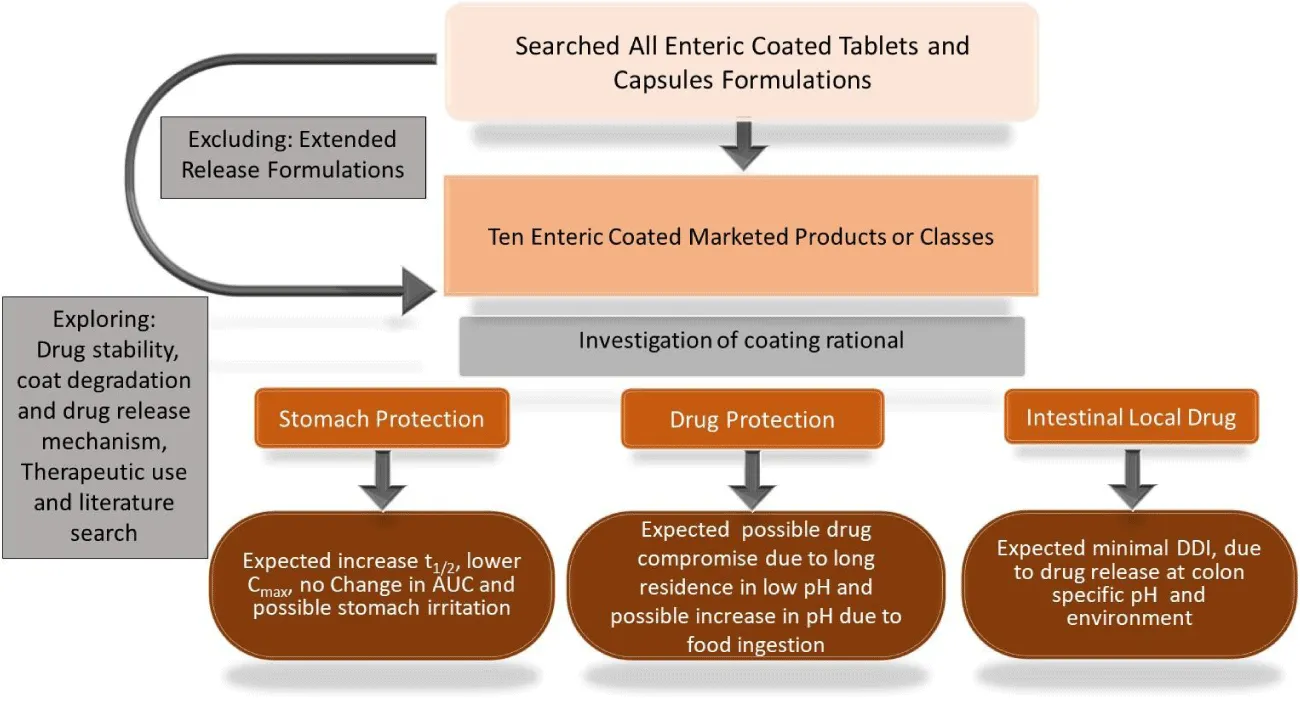
The pharmacist should be able to advise on the most appropriate drug formulation to minimise DDI risk by integrating their understanding of the drug and formulation properties such as solubility, dissolution, permeability, pH-dependent stability, metabolic pathways, and formulation factors (e.g., coated drug or prodrug). They should be able to provide needed clinical oversight, predicting and preventing drug interactions (Figure 1).
Funding Support Section
This work is supported by West Coast University
Conflict of Interest
All authors have no conflicts of interest to declare
- Calvarysky B, Dotan I, Shepshelovich D, Leader A, Cohen TD. Drug-drug interactions between glucagon-like peptide 1 receptor agonists and oral medications: a systematic review. Drug Saf. 2024;47(5):439-451. Available from: https://doi.org/10.1007/s40264-023-01392-3
- De La Peña A, Cui X, Geiser J, Loghin C. No dose adjustment is recommended for digoxin, warfarin, atorvastatin or a combination oral contraceptive when coadministered with dulaglutide. Clin Pharmacokinet. 2017;56(11):1415-1427. Available from: https://doi.org/10.1007/s40262-017-0531-7
- Hooper L, Liu S, Pai MP. GLP-1RA-induced delays in gastrointestinal motility: predicted effects on coadministered drug absorption by PBPK analysis. Pharmacotherapy. 2025;45(4):211-219. Available from: https://doi.org/10.1002/phar.70007
- Min JS, Jo SJ, Lee S, et al. A comprehensive review on the pharmacokinetics and drug-drug interactions of approved GLP-1 receptor agonists and a dual GLP-1/GIP receptor agonist. Drug Des Devel Ther. 2025;19:3509-3537. Available from: https://doi.org/10.2147/DDDT.S506957
- Hausner H, Derving Karsbøl J, Holst AG, et al. Effect of semaglutide on the pharmacokinetics of metformin, warfarin, atorvastatin and digoxin in healthy subjects. Clin Pharmacokinet. 2017;56(11):1391-1401. Available from: https://doi.org/10.1007/s40262-017-0532-6
- Malm-Erjefält M, Ekblom M, Vouis J, Zdravkovic M, Lennernäs H. Effect on the gastrointestinal absorption of drugs from different classes in the Biopharmaceutics Classification System, when treating with liraglutide. Mol Pharm. 2015;12(11):4166-4173. Available from: https://doi.org/10.1021/acs.molpharmaceut.5b00278
- Goyal RK, Guo Y, Mashimo H. Advances in the physiology of gastric emptying. Neurogastroenterol Motil. 2019;31(4):e13546. Available from: https://doi.org/10.1111/nmo.13546
- Nimmo WS. Drugs, diseases and altered gastric emptying. Clin Pharmacokinet. 1976;1(3):189-203. Available from: https://doi.org/10.2165/00003088-197601030-00002
- Hunt JN, Macdonald I. The influence of volume on gastric emptying. J Physiol. 1954;126(3):459-474. Available from: https://doi.org/10.1113/jphysiol.1954.sp005222
- McIntyre A, Vincent RM, Perkins AC, Spiller RC. Effect of bran, ispaghula, and inert plastic particles on gastric emptying and small bowel transit in humans: the role of physical factors. Gut. 1997;40(2):223-227. Available from: https://doi.org/10.1136/gut.40.2.223
- Yau AMW, McLaughlin J, Maughan RJ, Gilmore W, Ashworth JJ, Evans GH. A pilot study investigating the influence of glucagon-like peptide-1 receptor single nucleotide polymorphisms on gastric emptying rate in Caucasian men. Front Physiol. 2018;9:1331. Available from: https://doi.org/10.3389/fphys.2018.01331
- Štefanič M, Locatelli I, Vrečer F, Sever T, Mrhar A, Bogataj M. The influence of gastric emptying kinetics on the drug release from enteric coated pellets in fasted state: an in vitro/in vivo correlation. Eur J Pharm Biopharm. 2012;82(2):376-382. Available from: https://doi.org/10.1016/j.ejpb.2012.07.011
- Jalleh RJ, Plummer MP, Marathe CS, et al. Clinical consequences of delayed gastric emptying with GLP-1 receptor agonists and tirzepatide. J Clin Endocrinol Metab. 2024;110(1):1-15. Available from: https://doi.org/10.1210/clinem/dgae719
- Dressman JB, Berardi RR, Dermentzoglou LC, et al. Upper gastrointestinal pH in young, healthy men and women. Pharm Res. 1990;7(7):756-761. Available from: https://doi.org/10.1023/A:1015827908309
- Sams L, Paume J, Giallo J, Carrière F. Relevant pH and lipase for in vitro models of gastric digestion. Food Funct. 2016;7(1):30-45. Available from: https://doi.org/10.1039/C5FO00930H
- Di Ciaula A, Wang DQ, Portincasa P. Gallbladder and gastric motility in obese newborns, pre-adolescents and adults. J Gastroenterol Hepatol. 2012;27(8):1298-1305. Available from: https://doi.org/10.1111/j.1440-1746.2012.07149.x
- Jackson SJ, Leahy FE, McGowan AA, Bluck LJC, Coward WA, Jebb SA. Delayed gastric emptying in the obese: an assessment using the non-invasive 13C-octanoic acid breath test. Diabetes Obes Metab. 2004;6(4):264-270. Available from: https://doi.org/10.1111/j.1462-8902.2004.0344.x
- Maddox A, Horowitz M, Wishart J, Collins P. Gastric and oesophageal emptying in obesity. Scand J Gastroenterol. 1989;24(5):593-598. Available from: https://doi.org/10.3109/00365528909093095
- Javidi D, Webb D, Diaz HO, et al. Differential gastric motility, gut hormone, and appetite changes following a mixed meal in people with obesity and healthy controls. Neurogastroenterol Motil. 2025;37(11):e70163. Available from: https://doi.org/10.1111/nmo.70163
- Maxwell V, Shulkes A, Brown JC, Solomon TE, Walsh JH, Grossman MI. Effect of gastric inhibitory polypeptide on pentagastrin-stimulated acid secretion in man. Dig Dis Sci. 1980;25(2):113-116. Available from: https://doi.org/10.1007/BF01308308
- Lu CX, An XX, Yu Y, et al. Pooled analysis of gastric emptying in patients with obesity: implications for oral absorption projection. Clin Ther. 2021;43(10):1768-1788. Available from: https://doi.org/10.1016/j.clinthera.2021.08.006
- Lartigue S, Bizais Y, Bruley Des Varannes S, Murat A, Pouliquen B, Galmiche JP. Inter- and intrasubject variability of solid and liquid gastric emptying parameters: a scintigraphic study in healthy subjects and diabetic patients. Dig Dis Sci. 1994;39(1):109-115. Available from: https://doi.org/10.1007/BF02090069
- Lu Y, Wei W, Chen H, et al. Investigating the role of IGF-1 in diabetic gastroparesis: a preliminary review. Acta Diabetol. Published online October 24, 2025. Available from: https://doi.org/10.1007/s00592-025-02578-0
- Liu BD, Udemba SC, Liang K, et al. Shorter-acting glucagon-like peptide-1 receptor agonists are associated with increased development of gastro-oesophageal reflux disease and its complications in patients with type 2 diabetes mellitus: a population-level retrospective matched cohort study. Gut. 2024;73(2):246-254. Available from: https://doi.org/10.1136/gutjnl-2023-329651
- Quast DR, Schenker N, Menge BA, Nauck MA, Kapitza C, Meier JJ. Effects of lixisenatide versus liraglutide (short- and long-acting GLP-1 receptor agonists) on oesophageal and gastric function in patients with type 2 diabetes. Diabetes Care. 2020;43(9):2137-2145. Available from: https://doi.org/10.2337/dc20-0720
- Umapathysivam MM, Lee MY, Jones KL, et al. Comparative effects of prolonged and intermittent stimulation of the glucagon-like peptide 1 receptor on gastric emptying and glycemia. Diabetes. 2014;63(2):785-790. Available from: https://doi.org/10.2337/db13-0893
- Cymbalta package insert. U.S. Food and Drug Administration.
- Kuang C, Sun Y, Li B, et al. Preparation and evaluation of duloxetine hydrochloride enteric-coated pellets with different enteric polymers. Asian J Pharm Sci. 2017;12(3):216-226. Available from: https://doi.org/10.1016/j.ajps.2016.08.007
- Sinha VR, Anamika, Kumria R, Bhinge JR. Stress degradation studies on duloxetine hydrochloride and development of an RP-HPLC method for its determination in capsule formulation. J Chromatogr Sci. 2009;47(7):589-593. Available from: https://doi.org/10.1093/chromsci/47.7.589
- DellaGreca M, Iesce MR, Previtera L, Rubino M, Temussi F, Brigante M. Degradation of lansoprazole and omeprazole in the aquatic environment. Chemosphere. 2006;63(7):1087-1093. Available from: https://doi.org/10.1016/j.chemosphere.2005.09.003
- Ekpe A, Jacobsen T. Effect of various salts on the stability of lansoprazole, omeprazole, and pantoprazole as determined by high-performance liquid chromatography. Drug Dev Ind Pharm. 1999;25(9):1057-1065. Available from: https://doi.org/10.1081/DDC-100102270
- Gupta HP, Saini K, Dhingra P, Pandey R. Study of acid-catalyzed reactions of proton pump inhibitors at D.M.E. Port Electrochim Acta. 2007;26(5):433-448. Available from: https://doi.org/10.4152/pea.200805433
- Clayton D, Leslie A. The bioavailability of erythromycin stearate versus enteric-coated erythromycin base when taken immediately before and after food. J Int Med Res. 1981;9(6):470-477. Available from: https://doi.org/10.1177/030006058100900608
- Somogyi AA, Bochner F, Hetzel D, Williams DB. Evaluation of the intestinal absorption of erythromycin in man: absolute bioavailability and comparison with enteric coated erythromycin. Pharm Res. 1995;12(1):149-154. Available from: https://doi.org/10.1023/A:1016215510223
- Mather L, Austin K, Philpot C, McDonald P. Absorption and bioavailability of oral erythromycin. Br J Clin Pharmacol. 1981;12(2):131-140. Available from: https://doi.org/10.1111/j.1365-2125.1981.tb01191.x
- Fraser DG. Selection of an oral erythromycin product. Am J Hosp Pharm. 1980;37(9):1199-1205.
- Watanabe Y, Sano M, Motohashi K, Yoneda R. Effect of dissolving pH of enteric coating agent on bioavailability of enteric coated tablets of erythromycin in man. Yakugaku Zasshi. 1978;98(8):1092-1100. Available from: https://doi.org/10.1248/yakushi1947.98.8_1092
- Kim YH, Heinze TM, Beger R, Pothuluri JV, Cerniglia CE. A kinetic study on the degradation of erythromycin A in aqueous solution. Int J Pharm. 2004;271(1-2):63-76. Available from: https://doi.org/10.1016/j.ijpharm.2003.10.023
- Nakagawa Y, Itai S, Yoshida T, Nagai T. Physicochemical properties and stability in the acidic solution of a new macrolide antibiotic, clarithromycin, in comparison with erythromycin. Chem Pharm Bull (Tokyo). 1992;40(3):725-728. Available from: https://doi.org/10.1248/cpb.40.725
- Kuhn RJ, Eyting S, Henniges F, Potthoff A. In vitro comparison of physical parameters, enzyme activity, acid resistance, and pH dissolution characteristics of enteric-coated pancreatic enzyme preparations: implications for clinical variability and pharmacy substitution. J Pediatr Pharmacol Ther. 2007;12(2):115-128. Available from: https://doi.org/10.5863/1551-6776-12.2.115
- Aloulou A, Puccinelli D, Sarles J, Laugier R, Leblond Y, Carrière F. In vitro comparative study of three pancreatic enzyme preparations: dissolution profiles, active enzyme release and acid stability. Aliment Pharmacol Ther. 2008;27(3):283-292. Available from: https://doi.org/10.1111/j.1365-2036.2007.03563.x
- Jeong H, Kaplan B. Therapeutic monitoring of mycophenolate mofetil. Clin J Am Soc Nephrol. 2007;2(1):184-191. Available from: https://doi.org/10.2215/CJN.02860806
- Atelvia package insert. U.S. Food and Drug Administration.
- Azulfidine package insert. U.S. Food and Drug Administration.
- Sandborn WJ, Korzenik J, Lashner B, et al. Once-daily dosing of delayed-release oral mesalamine (400-mg tablet) is as effective as twice-daily dosing for maintenance of remission of ulcerative colitis. Gastroenterology. 2010;138(4):1286-1296.e3. Available from: https://doi.org/10.1053/j.gastro.2009.12.054
- Clemett D, Markham A. Prolonged-release mesalazine: a review of its therapeutic potential in ulcerative colitis and Crohn disease. Drugs. 2000;59(4):929-956. Available from: https://doi.org/10.2165/00003495-200059040-00016
- Manabe N, Cremonini F, Camilleri M, Sandborn WJ, Burton DD. Effects of bisacodyl on ascending colon emptying and overall colonic transit in healthy volunteers. Aliment Pharmacol Ther. 2009;30(9):930-936. Available from: https://doi.org/10.1111/j.1365-2036.2009.04118.x

 Save to Mendeley
Article Alerts
Subscribe to our articles alerts and stay tuned.
 This work is licensed under a Creative Commons Attribution 4.0 International License.